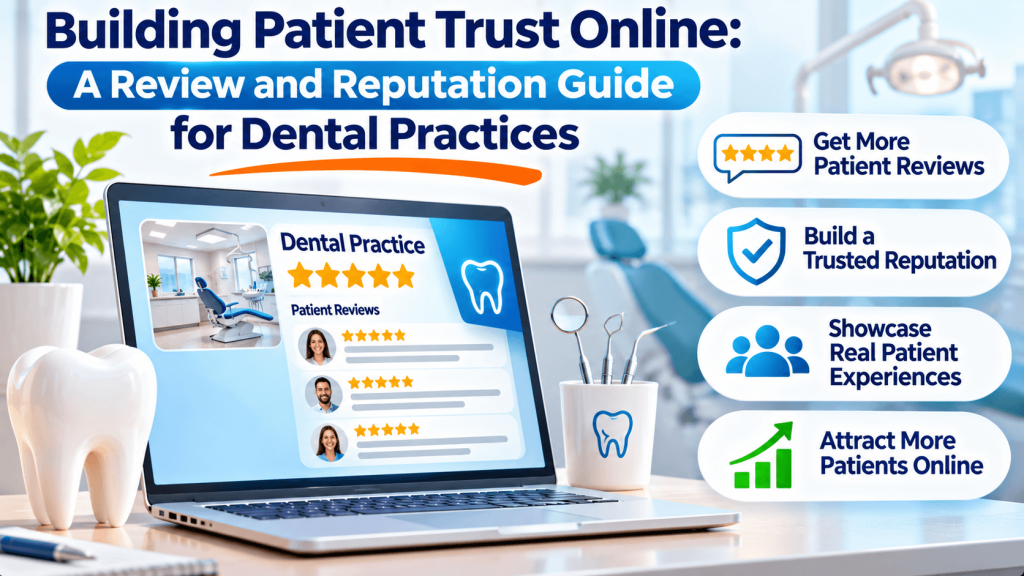
Someone new to town needs a dentist. Before booking, they’ll likely compare a few practices on their phone, read reviews, glance at photos, and check whether the office takes their insurance. Most of that decision happens before anyone calls your front desk, which is why your online reputation deserves the same attention as your waiting room.
What Patients Look for Before They Book
Dental care is personal, and many people feel some anxiety about it. Patients tend to look for signs of comfort and reliability: recent reviews that mention gentle care or clear explanations, accurate hours, insurance information, and photos of the actual office and team.
Star ratings matter, but so does recency. A practice with steady reviews from the last few months often feels more trustworthy than one whose newest review is three years old, even if the older rating is slightly higher.
Asking for Reviews the Right Way
The simplest system is often the best. After a positive visit, a team member can mention that reviews help other families find the practice, followed by a text or email with a direct link. Ask every patient the same way rather than only those you expect will be happy.
Google’s review policies prohibit offering incentives for reviews and discourage selectively asking only satisfied customers. The Federal Trade Commission also has rules against fake reviews and review suppression. Staying within these rules protects both your reputation and your listing.
Responding Without Risking Patient Privacy
Responding to reviews shows prospective patients that real people are paying attention. For dental practices, the challenge is privacy. A reply should never confirm that someone is a patient or mention treatment details, even if the reviewer shared them first.
A safe approach is a short, general response: thank the reviewer, state your commitment to comfortable care, and invite them to call the office to talk directly. Many practices keep a few pre-approved templates so staff can respond quickly without risking a HIPAA problem.
Trust also comes from consistency. Make sure your office details match across Google Business Profile, insurance network directories, and general business directories. Listing your office in the Dental Care category on Local Dir places it alongside other dental providers, which is where patients browsing by specialty are likely to look.
Conclusion
Patient trust online is built through steady habits: asking for honest reviews, responding carefully, and keeping practice information accurate everywhere it appears. None of these steps guarantees new patients, but together they make your practice easier to choose. A good next step is to audit your listings, including on Local Dir, and set a monthly reminder to review new feedback.
Frequently Asked Questions
Can a dental office remove a negative review?
Generally, no. Platforms remove reviews only when they violate content policies, such as spam, conflicts of interest, or offensive language. You can flag a review you believe breaks those rules. For honest but critical feedback, a calm, private-minded response usually helps more with future patients than trying to make the review disappear.
Is it okay to post patient testimonials on our website?
It can be, but get written authorization from the patient before using their name, photo, or story. HIPAA rules apply to identifiable health information, so the safest practice is a signed consent form for each testimonial. Never edit a testimonial in a way that changes its meaning or adds claims the patient didn’t make.
How many reviews does a dental practice need?
There’s no magic number. Patients tend to weigh recency, consistency, and detail more than a total count. A steady flow of genuine reviews from real patients is more useful than a sudden burst. Focus on building a routine for asking every patient rather than chasing a specific target.
Should our practice be listed on general business directories?
General directories can help patients find and confirm your contact details, and they add to your overall online presence. Choose well-organized directories with relevant categories, keep your information identical to your website, and avoid low-quality sites that exist only to sell links.
Who on our team should handle review responses?
Assign one trained person, often an office manager, so responses stay consistent and privacy-safe. Give them pre-approved templates and a clear rule: never confirm someone is a patient. Complex complaints should be escalated to the dentist or practice owner before any public reply is posted.